|
|
|
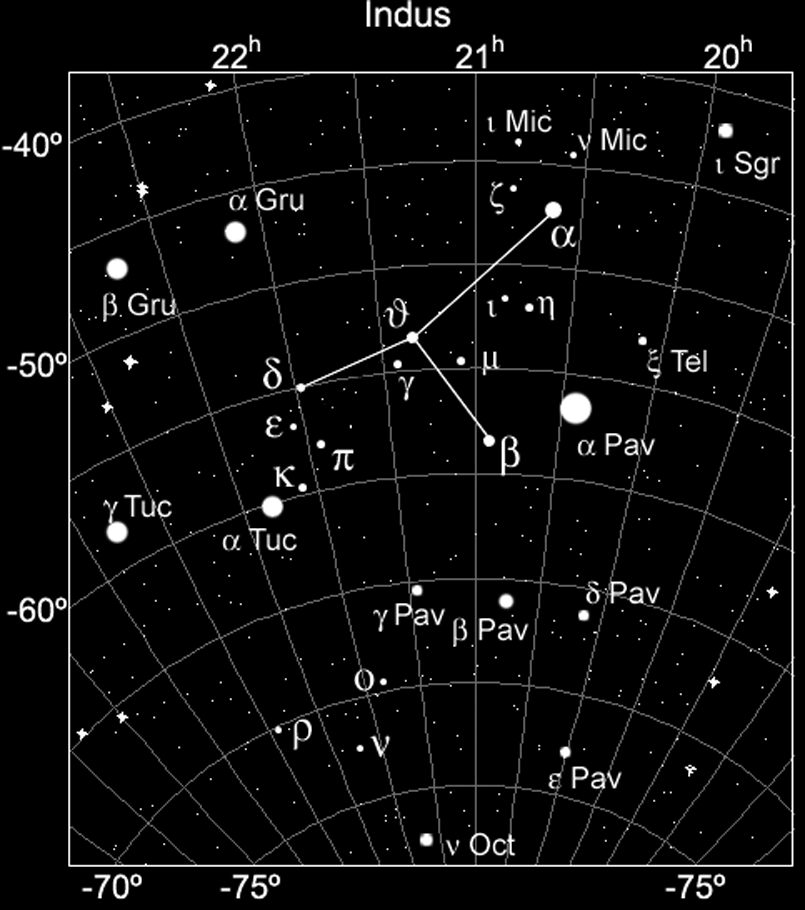
The constellation has little more than a few binaries, and one of the
closest stars to our Solar System.
As it closely matches our own sun, Epsilon Indi has been studied
as a possible candidate for planets, however none have yet been found
circling the star.
Alpha Indi is a wide binary with a very faint companion: 3.1, 12.5;
PA 199 degrees, and separation 67.4".
Delta Indi is an extremely rapid binary, only 12 years; thus the
component is very close. Epoch 2000 values: 4.4, 5.5; PA 50 degrees,
separation 0.2".
Theta Indi is a pleasant binary, easily resolved: 4.4, 7.0; PA
275 degrees, separation 6".
For a more detailed appreciation of Indus, visit the Binocular Section.
|
Or go to
the Main Menu
All files associated with The Constellations Web Page are
© Richard Dibon-Smith.